
Dr. Steven Silverman retired as of March 2026. Drs. Ulloa and Arosemena of Vascular Wellness Institute are now available and taking new patients. Same office, same friendly faces, and a new lens on your vascular care!

Medically Reviewed By:

2026-05-01

Sudden leg swelling with pain or redness may indicate a blood clot. Seek emergency evaluation immediately. If you also experience chest pain, shortness of breath, or rapid heart rate, call 911 — this may indicate a pulmonary embolism.

DVT (Deep Vein Thrombosis)

Also Known As: DVT
Deep vein thrombosis (DVT) is the formation of a blood clot within the deep veins of the leg, thigh, or pelvis. DVT is a serious medical condition that can cause significant pain and swelling and carries the risk of pulmonary embolism — a potentially life-threatening complication where a clot travels to the lungs. Prompt diagnosis and treatment are essential to prevent long-term complications including post-thrombotic syndrome and chronic venous obstruction.

What Causes DVT?

DVT develops when blood flow through the deep veins slows, clotting factors are elevated, or the vein wall is injured. The classic risk triad — known as Virchow’s Triad — includes stasis (slow blood flow), hypercoagulability (excess clotting tendency), and endothelial injury. Common triggers include prolonged immobility (long flights, bed rest, post-surgery), cancer, inherited clotting disorders, pregnancy, hormone therapy, obesity, and prior DVT.

DVT Symptoms

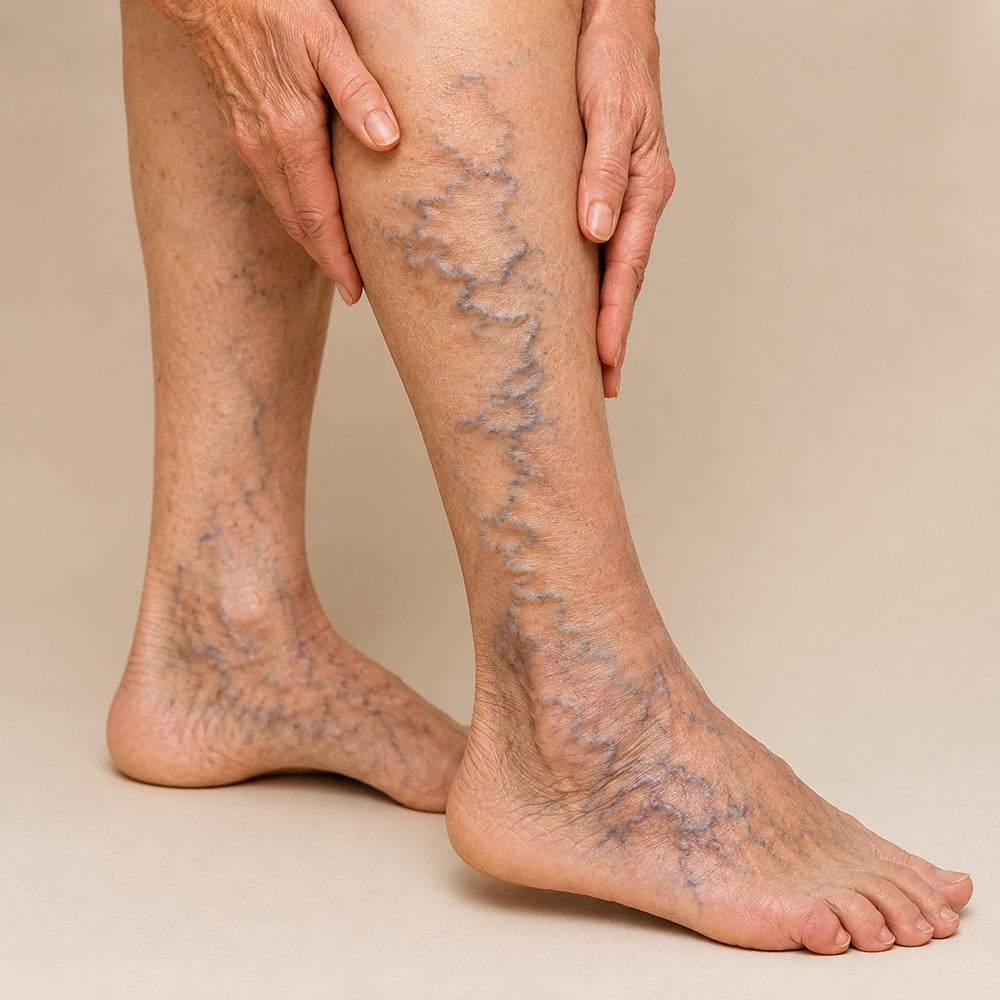
Classic DVT symptoms include sudden swelling of one leg, a deep aching or cramping pain — often in the calf, thigh, or behind the knee — warmth and redness of the skin overlying the clot, and distended surface veins. Many DVTs, however, are silent — presenting no symptoms until the clot progresses or embolizes. Any new unexplained leg swelling warrants urgent evaluation.

DVT Diagnosis

The primary diagnostic test for DVT is duplex venous ultrasound, a non-invasive, painless imaging study that identifies clot within the deep venous system with high accuracy. When the ultrasound findings are inconclusive or a more extensive thrombosis is suspected, CT venography or MRI venography may be used. Blood D-dimer testing can help rule out DVT in low-risk patients.

DVT Treatment in Sarasota & Bradenton

Initial DVT management involves anticoagulation therapy — blood thinners such as apixaban, rivaroxaban, or enoxaparin — to prevent clot propagation and allow the body’s natural clot-dissolving mechanisms to work. For extensive or limb-threatening DVT, catheter-directed thrombolysis or mechanical thrombectomy may be performed to rapidly remove the clot and restore flow.

Patients with DVT caused by underlying venous obstruction — such as May-Thurner syndrome, in which the left iliac vein is compressed by the overlying artery — may require venous stenting after clot removal to prevent recurrence. Our vascular surgeons in Sarasota and Bradenton evaluate each patient individually to determine the safest, most effective treatment pathway.

SYMPTOMS

  • Sudden swelling of one leg
  • Deep aching or cramping pain — often in the calf, thigh, or behind the knee
  • Warmth and redness of the skin over the clot
  • Distended surface veins
  • Many DVTs are silent with no symptoms until the clot progresses

DIAGNOSIS METHODS

  • Duplex Venous Ultrasound +

    First-line test — identifies clot within the deep venous system with high accuracy.

  • D-Dimer Blood Test +

    Blood test that helps rule out DVT in low-risk patients

  • CT Venography +

    Used when ultrasound is inconclusive or extensive pelvic/IVC thrombosis is suspected.

TREATMENTS

RELATED CONDITIONS

FREQUENTLY ASKED QUESTIONS

  • Can DVT resolve on its own? +

    Some small DVTs do resolve with anticoagulation alone. However, without treatment, DVT carries significant risks including pulmonary embolism, clot extension, and post-thrombotic syndrome — a chronic condition of leg pain, swelling, and skin changes. All DVTs should be evaluated by a physician.

  • How long do I need blood thinners after DVT? +

    Treatment duration depends on the cause and location of the DVT, whether it was provoked (by surgery, immobility, etc.) or unprovoked, and whether a clotting disorder is identified. Most patients are treated for 3–12 months; some require lifelong anticoagulation.

  • What is post-thrombotic syndrome? +

    Post-thrombotic syndrome is a long-term complication of DVT in which the vein valves are permanently damaged by the clot, causing chronic leg pain, swelling, skin changes, and in severe cases venous ulcers. Appropriate treatment of acute DVT and proper use of compression stockings reduces the risk.

  • Is DVT related to May-Thurner syndrome? +

    Yes. May-Thurner syndrome — compression of the left iliac vein by the right iliac artery — is a structural cause of DVT, particularly in young women with left-sided leg swelling. Evaluation for May-Thurner syndrome is important in patients with unexplained left-leg DVT.