
Abdominal vs. Thoracic Aortic Aneurysms
Abdominal aortic aneurysms (AAAs) are the most common type, located in the portion of the aorta within the abdomen. Most AAAs develop below the renal arteries (infrarenal). The normal aortic diameter is approximately 2 cm; an AAA is typically defined as a diameter greater than 3 cm, with repair generally recommended when the diameter exceeds 5.5 cm in men or 5.0 cm in women, or when the aneurysm grows more than 0.5 cm in six months. Thoracic aortic aneurysms (TAAs) involve the portion of the aorta in the chest.
Risk Factors for Aortic Aneurysm
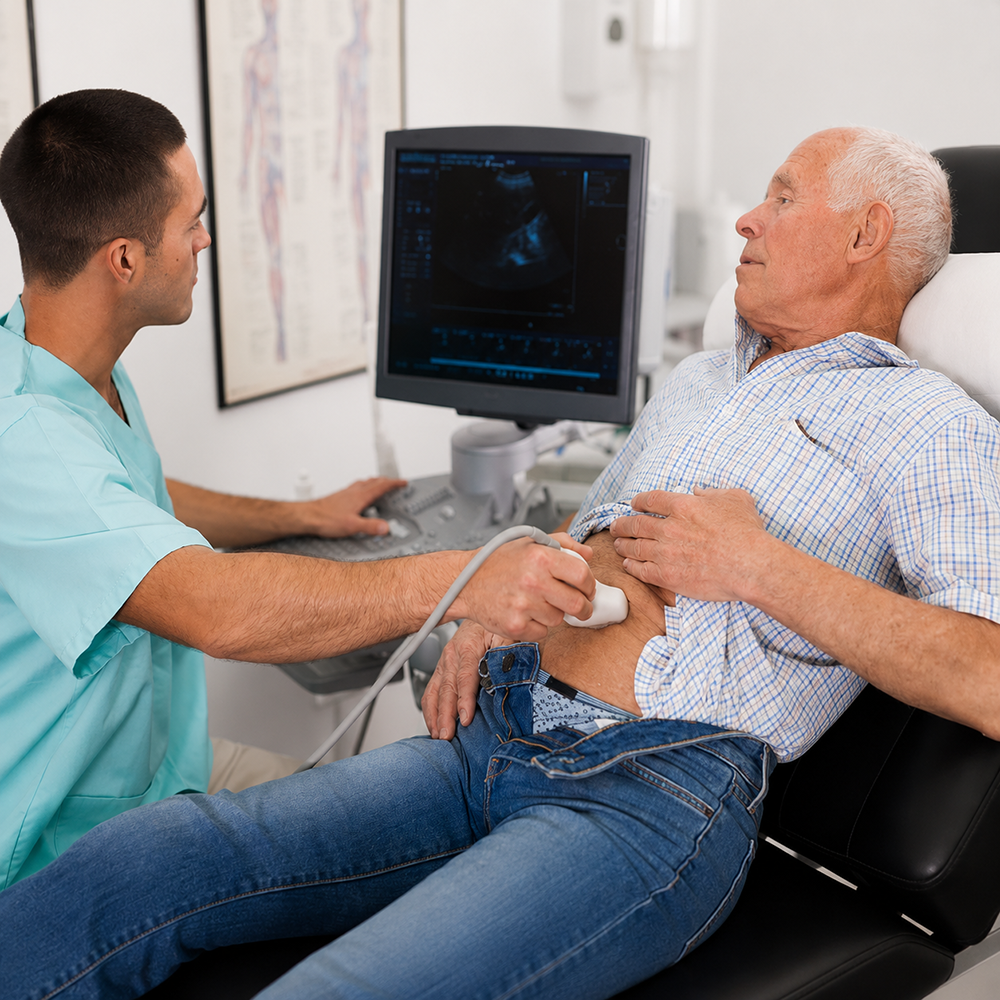
The primary risk factors include age over 65, male sex, smoking history, high blood pressure, atherosclerosis, and family history (a first-degree relative with AAA significantly increases risk). AAA is approximately four times more common in men than women, though women have a higher rupture risk at smaller diameters. The U.S. Preventive Services Task Force recommends one-time abdominal aortic ultrasound screening in men aged 65–75 who have ever smoked.
Aortic Aneurysm Symptoms
Most aortic aneurysms are asymptomatic and discovered incidentally on imaging performed for another reason. When symptoms develop they may include a pulsating sensation in the abdomen, deep back or flank pain, or abdominal fullness. Sudden, severe, tearing abdominal or back pain is the hallmark of rupture and requires emergency intervention.
Aortic Aneurysm Repair in Sarasota & Bradenton
Repair options include endovascular aneurysm repair (EVAR) — the less invasive approach — in which a stent-graft is delivered through small groin incisions and deployed within the aneurysm sac to reroute blood flow away from the weakened aortic wall. EVAR has largely replaced open surgical repair for anatomically suitable patients, offering faster recovery and lower short-term risk. Open surgical repair — in which the aneurysm is replaced with a fabric graft — remains the treatment of choice for complex anatomy unsuitable for EVAR and is highly durable.