
Non-Healing Wounds & Vascular Ulcers — Care in Sarasota & Bradenton, Florida
Types of Vascular Wounds
Arterial Ulcers
Arterial ulcers result from critically reduced blood flow to the skin and underlying tissue, causing tissue death. They are typically painful, punched-out, pale or black-based ulcers with minimal drainage, located on the toes, heel, or bony prominences of the foot. They are a manifestation of critical limb ischemia from advanced PAD and require urgent vascular revascularization — not just wound care — to heal.
Venous Ulcers
Venous ulcers account for 70–80% of chronic leg ulcers and result from chronic venous hypertension caused by incompetent vein valves in varicose veins or post-thrombotic disease. They are typically shallow, irregularly shaped ulcers with irregular borders and significant drainage, located on the gaiter area of the lower leg (medial ankle). They are managed with compression therapy, wound care, and treatment of the underlying venous disease, often with endovenous ablation.
Diabetic Foot Ulcers
Diabetic foot ulcers develop in patients with diabetic neuropathy and peripheral vascular disease. Numbness from neuropathy allows repetitive pressure injury to go unnoticed; reduced blood flow prevents healing. The diabetic foot is highly susceptible to infection, and diabetic foot ulcers are the leading cause of non-traumatic lower-extremity amputation in the United States. Florida’s large diabetic population makes diabetic foot care a critical public health priority throughout Sarasota and Manatee counties.
Non-Healing Wound Care in Sarasota & Bradenton
Our approach to non-healing wounds begins with a complete vascular evaluation — ABI measurement, arterial and venous duplex ultrasound, and occasionally CT angiography when revascularization is being planned — to identify and address any circulatory deficiency driving the wound. Without restoring adequate blood flow, no wound care intervention will reliably succeed.
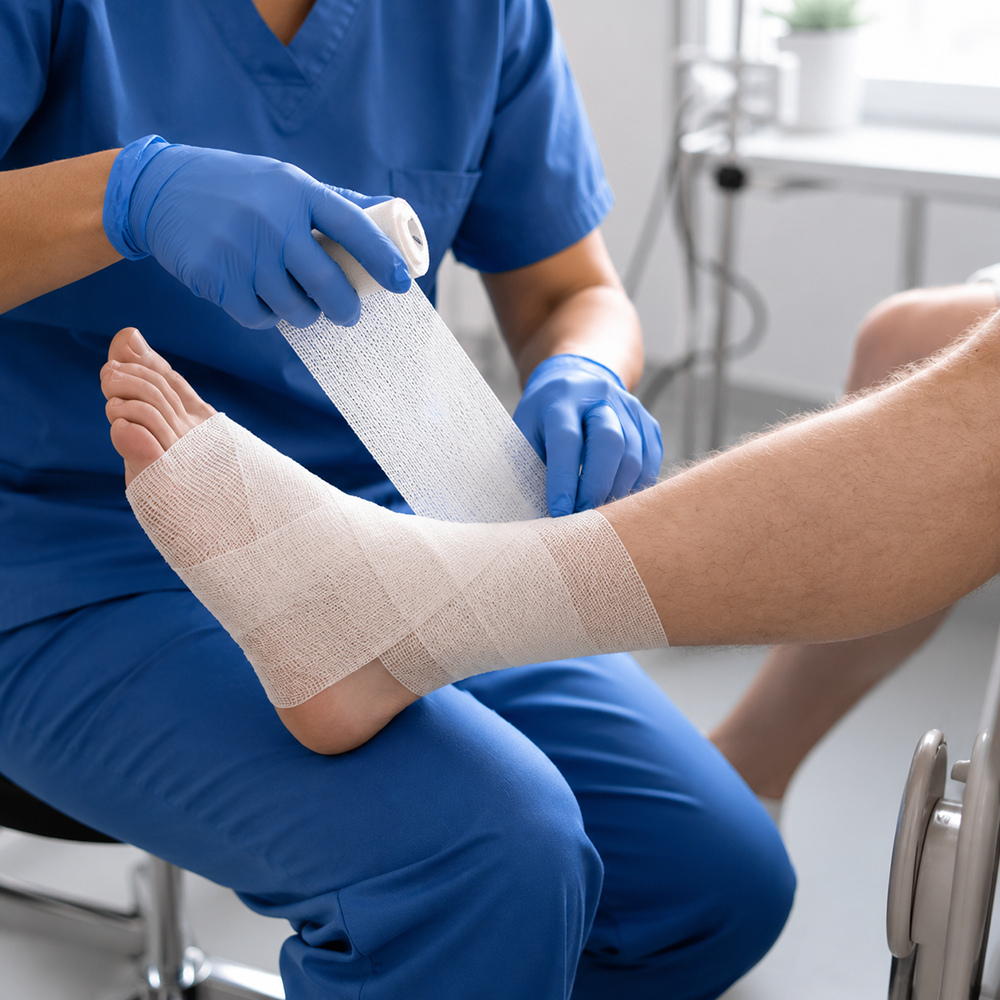
Wound care includes debridement of necrotic tissue, infection management with targeted antibiotics, advanced wound dressings (foam, alginate, collagen, negative pressure therapy as appropriate), and offloading of pressure. Our vascular surgeons are wound care specialists and coordinate care with podiatrists and infectious disease consultants to provide comprehensive limb salvage care.