
Dr. Steven Silverman retired as of March 2026. Drs. Ulloa and Arosemena of Vascular Wellness Institute are now available and taking new patients. Same office, same friendly faces, and a new lens on your vascular care!

Medically Reviewed By:

2026-05-01

Spider Veins

Also Known As: spider veins, telangiectasias, thread veins, broken capillaries, facial veins
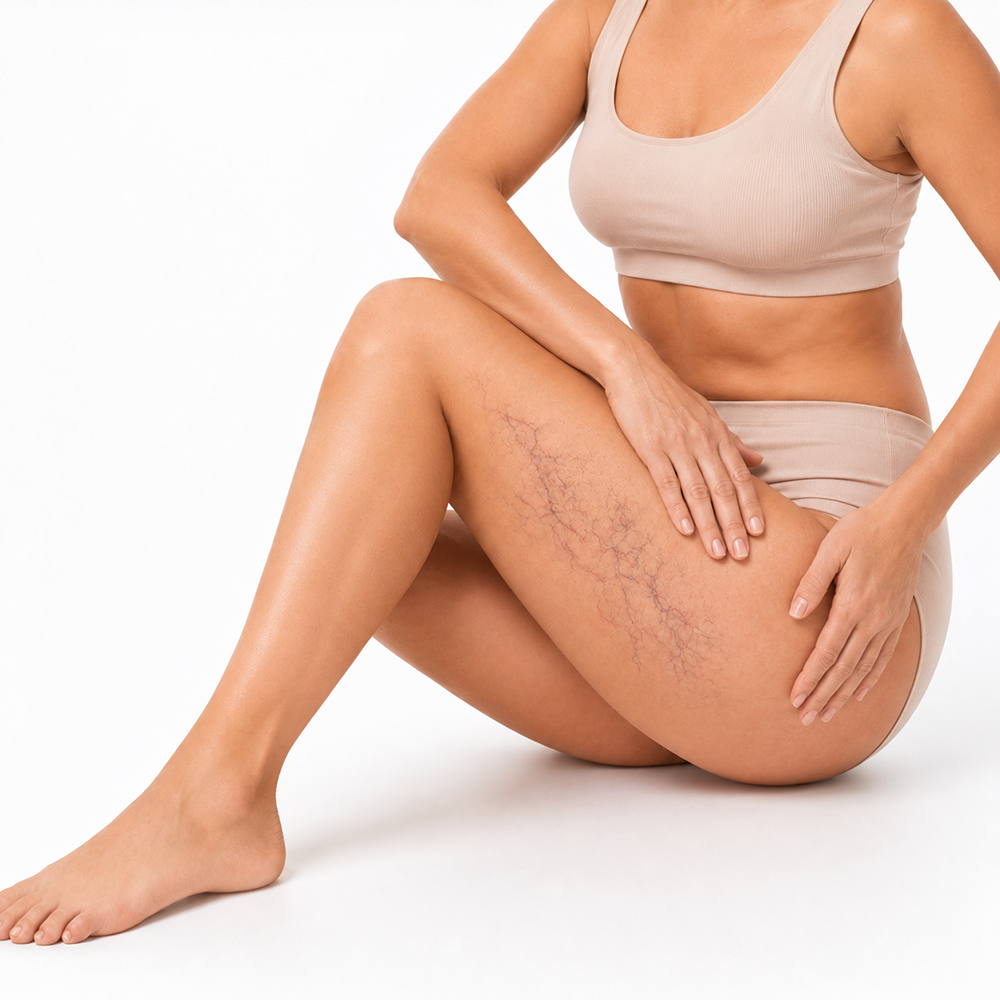
Spider veins are small, dilated blood vessels that appear as red, blue, or purple web-like patterns just beneath the skin surface, most commonly on the legs, thighs, and face. They are caused by weakened vein walls and valve dysfunction, and while primarily a cosmetic concern, they can cause localized burning, itching, or aching — especially after standing. Treatment is safe, fast, and highly effective.

What Causes Spider Veins?

Spider veins develop when small blood vessels near the skin surface dilate and become visible. Risk factors include heredity, hormonal changes (pregnancy, birth control, hormone therapy), prolonged standing, sun exposure, and aging. Florida’s outdoor lifestyle and high sun exposure mean spider veins are a particularly common concern for patients throughout Sarasota, Bradenton, and Manatee County.

Spider Vein Symptoms

Most spider veins are asymptomatic and identified for cosmetic reasons. Some patients report localized burning, itching, or a dull ache around the affected vessels — particularly at the end of the day or after standing for extended periods. Spider veins on the face may cause self-consciousness and can be associated with rosacea.

Spider Vein Treatment: Sclerotherapy in Sarasota & Bradenton

Sclerotherapy is the gold-standard treatment for spider veins. A tiny needle is used to inject a sclerosing solution — most commonly a foam or liquid — directly into each vessel. The solution irritates the vessel wall, causing it to collapse and eventually be reabsorbed by the body. Treated vessels typically fade over 3–6 weeks. Multiple sessions are often scheduled 4–6 weeks apart for comprehensive coverage.

The procedure is performed in our office, requires no anesthesia, and takes approximately 30–60 minutes. Patients wear compression stockings for one to two weeks post-treatment and are encouraged to walk regularly. Sun exposure to treated areas should be minimized for several weeks to reduce the risk of post-inflammatory pigmentation.

SYMPTOMS

  • Flat, red, purple, or blue web-like patterns just beneath the skin surface
  • Localized burning or itching around the affected vessels
  • Dull aching after prolonged standing (in symptomatic cases)
  • Cosmetic concern on the legs, thighs, or face
  • May be associated with underlying venous insufficiency

DIAGNOSIS METHODS

  • Clinical Examination +

    Visual assessment of vessel location, distribution, and pattern.

  • Duplex Venous Ultrasound (if underlying reflux suspected) +

    Performed when spider veins appear in large numbers or alongside varicose veins to evaluate for deeper valve dysfunction.

TREATMENTS

RELATED CONDITIONS

FREQUENTLY ASKED QUESTIONS

  • How many sclerotherapy sessions will I need? +

    The number of sessions depends on the extent and location of your spider veins. Most patients see significant improvement in 2–4 sessions. Your vascular surgeon will provide a personalized estimate after your initial evaluation.

  • Is spider vein treatment covered by insurance? +

    Sclerotherapy for purely cosmetic spider veins is generally not covered by insurance. However, when spider veins cause documented symptoms such as pain or aching, partial coverage may apply. We will verify your benefits before your visit.

  • Are spider veins dangerous? +

    Spider veins are generally not dangerous. However, they can be associated with underlying venous insufficiency, particularly when they appear in large numbers or alongside varicose veins. A vascular ultrasound can determine if deeper valve dysfunction is contributing.

  • Can spider veins be prevented? +

    You cannot completely prevent spider veins if you are genetically predisposed, but you can slow their progression with compression stockings, regular exercise, maintaining a healthy weight, and limiting prolonged standing.