
Dr. Steven Silverman retired as of March 2026. Drs. Ulloa and Arosemena of Vascular Wellness Institute are now available and taking new patients. Same office, same friendly faces, and a new lens on your vascular care!

Medically Reviewed By:

2026-05-01

Varicose Veins

Also Known As: Varicose Veins, Chronic Venous Insufficiency, CVI, Venous Reflux
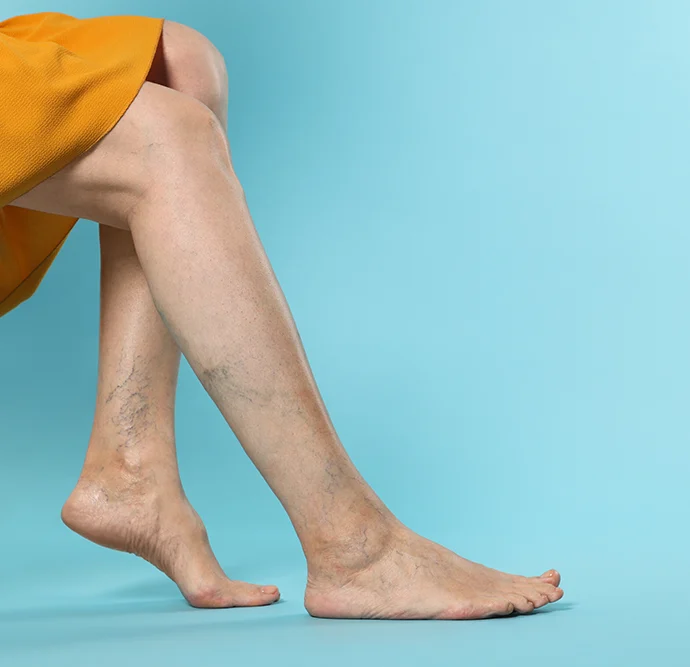
Varicose veins are enlarged, twisted, ropy veins that appear just beneath the skin surface, most commonly on the legs and feet. They develop when weakened or damaged vein valves allow blood to pool rather than flow efficiently back toward the heart. Affecting an estimated 23% of adults, varicose veins cause pain, heaviness, swelling, and skin changes that worsen without treatment.

What Causes Varicose Veins?

Varicose veins result from chronic venous insufficiency — a condition where the one-way valves inside the leg veins become incompetent and allow blood to flow backward (reflux) and pool in the lower extremities. Contributing factors include heredity, prolonged standing or sitting, pregnancy, obesity, and aging. Florida’s warm climate and active outdoor lifestyle can exacerbate symptoms, particularly during summer months when heat causes veins to dilate further.

Varicose Vein Symptoms

Common symptoms include visible bulging, blue or purple ropy veins on the legs; aching, heaviness, or throbbing — especially after prolonged standing; swelling of the ankles and lower legs by day’s end; itching or burning around affected veins; skin discoloration or hardening (lipodermatosclerosis) in long-standing cases; and venous ulcers in severe or untreated disease.

Varicose Vein Diagnosis in Sarasota & Bradenton

Diagnosis begins with a thorough clinical exam and duplex ultrasound — a painless, non-invasive test that maps the venous system and identifies the specific points of valve failure driving reflux. Our Sarasota and Bradenton offices provide in-house vascular ultrasound so patients receive a complete evaluation and treatment plan on the same visit whenever possible.

Minimally Invasive Varicose Vein Treatments

The era of painful vein stripping surgery is over. Today, the vast majority of varicose veins are treated with minimally invasive, office-based procedures performed under local anesthesia with little to no downtime.

Endovenous Ablation

Endovenous ablation uses laser or radiofrequency energy delivered through a thin catheter inserted into the diseased vein. Heat closes the vein permanently, rerouting blood through healthy veins. The procedure takes approximately 45 minutes and patients walk out of the office the same day.

Sclerotherapy

Sclerotherapy involves injecting a solution directly into the vein, causing it to collapse and fade. It is the treatment of choice for small varicose veins, reticular veins, and spider veins. Multiple sessions may be needed for optimal cosmetic and clinical results.

Microphlebectomy

Microphlebectomy (also called ambulatory phlebectomy) removes larger surface varicosities through tiny punctures using a specialized hook. There is no general anesthesia, no stitches, and minimal scarring. It is often performed alongside endovenous ablation for comprehensive treatment.

SYMPTOMS

  • Visible bulging, blue or purple ropy veins on legs
  • Aching, heaviness, or throbbing — especially after prolonged standing
  • Ankle and lower leg swelling by day's end, improving with elevation
  • Itching or burning around affected veins
  • Skin discoloration or hardening (lipodermatosclerosis)
  • Venous ulcers in severe or long-standing disease

DIAGNOSIS METHODS

  • Duplex Venous Ultrasound +

    Maps venous reflux and identifies points of valve failure. Performed in-house at both VWI locations.

  • Clinical Examination +

    Assessment of vein distribution, skin changes, and symptom severity with patient standing.

  • Ankle-Brachial Index (ABI) +

    Rules out coexisting arterial disease before treatment planning.

TREATMENTS

RELATED CONDITIONS

FREQUENTLY ASKED QUESTIONS

  • Are varicose veins just a cosmetic problem? +

    No. While many patients first notice varicose veins for cosmetic reasons, untreated varicose veins are a medical condition that can progress to chronic venous insufficiency, skin ulcers, superficial thrombophlebitis, and DVT. Most insurance plans cover treatment when symptoms such as pain, swelling, or skin changes are documented.

  • Will varicose veins come back after treatment? +

    Treated veins do not return, but new veins can develop over time — particularly in patients with a strong family history. Compression stockings, regular exercise, and maintaining a healthy weight help slow progression.

  • Is varicose vein treatment covered by insurance in Florida? +

    Most major insurance plans including Medicare cover varicose vein treatment when the patient documents symptoms such as pain, swelling, or skin changes and has tried compression therapy. Our staff will verify your coverage before your procedure.

  • How long is recovery from varicose vein treatment? +

    Most patients return to normal activity the same day or the next day. Compression stockings are worn for one to two weeks after treatment. Heavy exercise is restricted for one week.

  • What is the difference between varicose veins and spider veins? +

    Spider veins are smaller, flat networks of red or purple vessels visible through the skin. Varicose veins are larger, raised, and often symptomatic. Both can be treated, often during the same treatment session.