
Dr. Steven Silverman retired as of March 2026. Drs. Ulloa and Arosemena of Vascular Wellness Institute are now available and taking new patients. Same office, same friendly faces, and a new lens on your vascular care!

Medically Reviewed By:

2026-05-01

Claudication

Also Known As: PAD
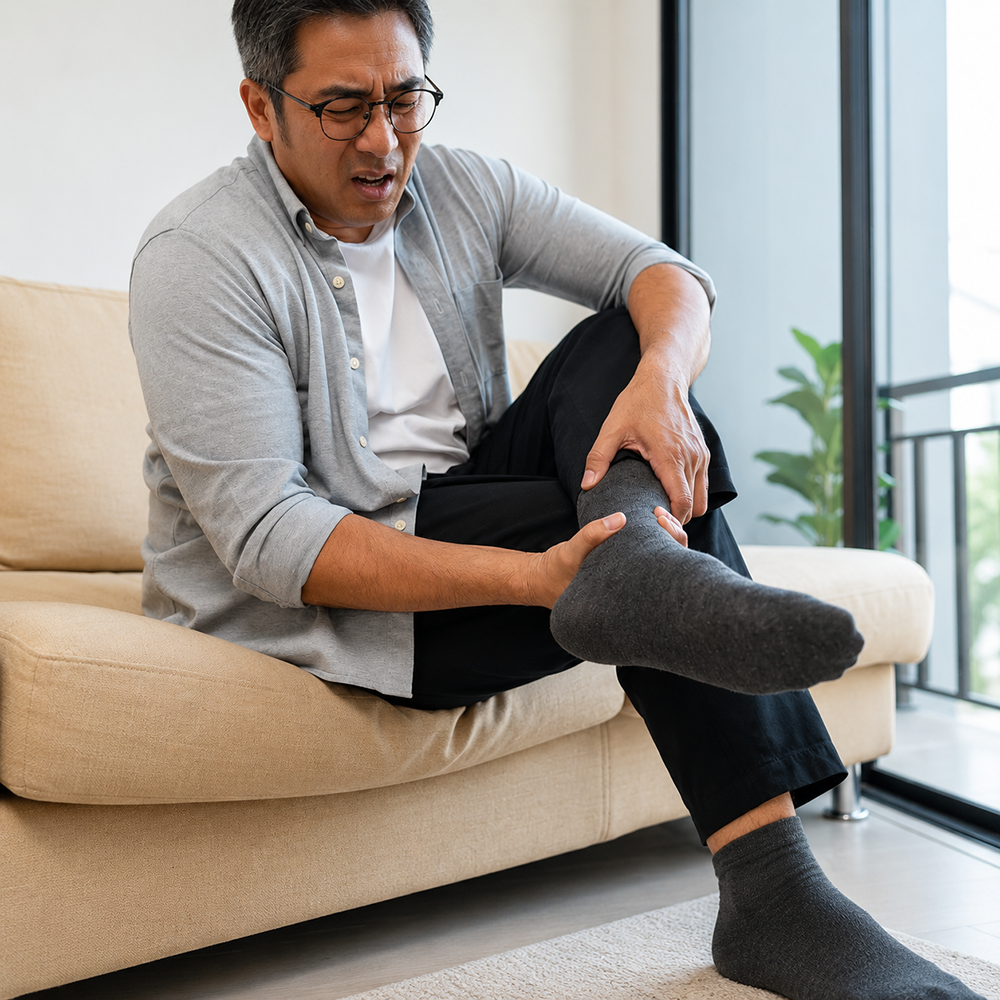
Claudication is a reproducible cramping, aching, or burning pain in the calf, thigh, or buttock that occurs predictably with walking a certain distance and relieves within minutes of rest. It is the hallmark symptom of peripheral artery disease (PAD) — atherosclerotic blockage of the arteries supplying the legs — and represents the muscles crying out for oxygen they cannot receive through narrowed vessels. Claudication is a warning sign not only of limb disease but of systemic cardiovascular risk.

Claudication — Leg Cramping & Fatigue While Walking | Sarasota & Bradenton

What Does Claudication Feel Like?

Patients with claudication describe the sensation as a deep cramping, squeezing, heaviness, or aching in the affected muscle group — most often the calf (with femoral-popliteal disease) or the thigh and buttock (with iliac disease). The pain reliably comes on after a predictable walking distance — which may be as short as half a block in severe disease or as long as several blocks in mild disease — and reliably resolves within two to five minutes of standing still. The muscle is not painful at rest.

Claudication vs. Other Causes of Leg Pain While Walking

Not all walking-related leg pain is claudication. Neurogenic claudication — caused by lumbar spinal stenosis compressing the nerve roots — mimics vascular claudication but is typically relieved by sitting or leaning forward rather than simply stopping. Distinguishing the two requires careful history-taking, physical examination, and vascular testing including the ankle-brachial index (ABI). Musculoskeletal causes such as hip osteoarthritis may also produce walking-related pain.

What Causes Claudication?

The primary cause is PAD — atherosclerotic narrowing of the femoral, popliteal, or iliac arteries that reduces blood supply to the leg muscles. Less commonly, claudication is caused by peripheral aneurysms with thrombus (particularly popliteal aneurysms) that reduce distal perfusion, or Buerger’s disease in young smokers affecting the distal vessels.

Claudication Treatment in Sarasota & Bradenton

Initial treatment focuses on cardiovascular risk factor modification — smoking cessation (the single most important intervention), statin therapy, antiplatelet therapy, blood pressure and diabetes control — combined with a structured walking exercise program. Supervised exercise therapy reliably increases the claudication-free walking distance and is recommended as first-line treatment before considering revascularization for stable claudication. For patients who fail conservative treatment or who have severely limiting claudication that impairs quality of life, lower extremity bypass or endovascular angioplasty can restore blood flow and dramatically increase walking ability.

SYMPTOMS

  • Cramping, aching, or fatigue in the calf, thigh, or buttock during walking
  • Symptoms begin after a predictable distance (claudication distance) and resolve with 1–5 minutes of rest
  • Pain free at rest
  • Shorter walking distance over time as disease progresses
  • Symptoms in the calf suggest femoral/popliteal disease; buttock/thigh suggest aorto-iliac disease

RISK FACTORS

  • Smoking
  • diabetes mellitus
  • hypertension
  • high cholesterol
  • age over 65
  • family history of cardiovascular disease
  • sedentary lifestyle
  • obesity

DIAGNOSIS METHODS

  • Ankle-Brachial Index (ABI) +

    First-line test — quantifies the degree of arterial insufficiency at rest and after exercise.

  • Duplex Arterial Ultrasound +

    Maps the location and extent of arterial blockages in the leg arteries.

  • CT Angiography +

    Detailed anatomy for planning bypass or angioplasty.

  • Treadmill Exercise Testing +

    Measures the claudication distance and post-exercise ABI to objectively quantify functional limitation.

TREATMENTS

RELATED SYMPTOMS

FREQUENTLY ASKED QUESTIONS

  • Is claudication an emergency? +

    Stable claudication is not an emergency — it is a chronic symptom of PAD. However, a sudden worsening of claudication, new rest pain, or any color or temperature change in the foot should be evaluated urgently, as these may indicate acute limb ischemia — a vascular emergency.

  • How far can I walk with claudication? +

    Walking distance varies with disease severity. Mild claudication may allow several blocks of walking; severe disease may limit a patient to less than half a block. With supervised exercise therapy, most patients approximately double their claudication-free walking distance within 3–6 months.

  • Will claudication get worse over time? +

    Claudication is generally a stable condition in patients who quit smoking, control cardiovascular risk factors, and exercise regularly. Approximately one-third of patients improve, one-third remain stable, and one-third progress. The risk of progression to critical limb ischemia is roughly 1–2% per year in well-managed patients.